
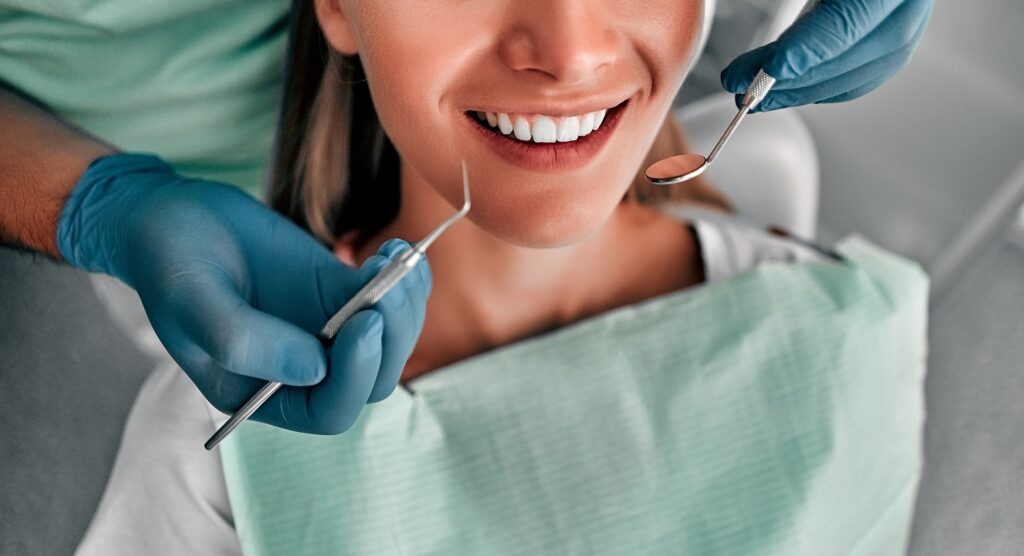
Periodontal charting is a diagnostic dental procedure at Chatham Family & Implant Dentistry where a hygienist uses a specialized millimeter probe to safely measure the depth of the gum pockets around each tooth. This six-point measurement system detects early bone loss, active gum inflammation, and periodontal disease before symptoms become visible or painful.
How High-Stress Careers Secretly Deepen Your Gum Pockets
The medical literature indicates that chronic stress negatively affects periodontal tissues [1] (Corridore et al., 2023). For ambitious professionals commuting from Pittsboro to the Triangle, daily stress levels directly affect gum health. Under chronic stress, your body produces excess cortisol, which naturally suppresses your immune system’s ability to fight off oral bacteria. High stress also frequently triggers nighttime teeth grinding. The immense pressure of grinding stretches the delicate periodontal ligaments that hold your teeth in place. This physical stretching creates a wider gap between the tooth and the gumline, instantly turning a healthy 2mm pocket into a dangerous 4mm bacterial trap. By actively charting your gums, our doctors can spot the hidden physical toll of your stress and intervene with a custom-fitted nightguard to protect your smile while you sleep.
Table that compares treatment pathways dictated by charting scores
Charting result | Target condition | Cost | Intervention | Maintenance level |
1- 3 mm pockets | Healthy gums | Covered by insurance | Maintains a healthy baseline | Low |
4-5mm pockets | Early periodontitis | Moderate | Halts the active infection | High |
6mm pockets | Bone loss | Higher investment | Stabilizes the remaining jawbone | Maximum |
The Magic of Voice-Activated Charting
We know busy parents and professionals don’t have time to sit in a dental chair longer than necessary. Historically, periodontal charting was a slow, clunky process: a hygienist measured a tooth, put down their instruments, wrote the number on a paper chart, and picked the instruments back up. As your hygienist measures your pockets, they simply speak the numbers into a secure, hands-free headset. The software instantly records the data onto your digital profile. This modern technology eliminates cross-contamination, removes the need for a dental assistant to act as a scribe, and shaves 10 to 15 minutes off your appointment time so you can get right back to your busy day.
Charting Your Titanium Investment: Implants vs. Natural Teeth
If you have invested in custom dental implants, you already know that titanium cannot get a cavity. However, the living gum tissue surrounding your implant is still highly vulnerable to a bacterial infection known as peri-implantitis. Charting the gum pockets around a dental implant is a mandatory part of your preventive routine, but it requires a completely different approach. Standard stainless-steel periodontal probes can leave microscopic scratches on your expensive titanium implants, creating tiny grooves where plaque can easily hide. Our specialized hygienists exclusively use flexible, medical-grade plastic or carbon-fiber probes for your implants. This specialist-level care ensures we accurately track your bone levels while keeping your premium dental work flawlessly smooth and scratch-free.
Customizing Your At-Home Routine
If your chart reveals a perfectly healthy mouth of 2s and 3s, you get to keep doing exactly what you are doing. However, if your hygienist flags a few localized 4s, we do not just send you home to figure it out on your own. We use these specific numbers to act as your personal health coaches. A 4mm pocket means traditional string floss is no longer reaching the bottom of the bacterial trap. We will help you pivot your routine by introducing a countertop water flosser and a sonic electric toothbrush. By aiming the water flosser directly at the newly discovered 4mm pockets for 90 days, you can easily flush out the hidden bacteria at home and proudly watch those numbers shrink back down to a healthy 3mm at your next visit.
Why Expectant Mothers See Changing Numbers
Clinical evidence supports that hormonal changes during pregnancy can exacerbate conditions such as gingivitis, periodontal disease, and dental caries [2] (Varsha et al., 2025). If you are expecting a new baby, you might be shocked to hear your hygienist calling out 4s and 5s during your chart, especially if you have always had perfect 2s and 3s. During pregnancy, a massive surge in progesterone increases the blood flow to your gum tissue. This hormonal shift makes your gums hyperreactive to even the smallest amount of everyday plaque. This temporary condition, known as pregnancy gingivitis, causes your gums to swell and push outward, creating artificially deeper pocket measurements on your chart. Our Pittsboro clinical team monitors these prenatal shifts with zero judgment. We simply provide gentle, targeted ultrasonic cleanings to manage the inflammation, knowing that your numbers will naturally tighten back up shortly after your baby is born.
FAQS
1. Why does my hygienist call out "bleeding" during the charting?
When your hygienist notes bleeding alongside a number, it simply means the gum tissue in that specific pocket is engorged with blood due to an active bacterial infection. Healthy, 2mm gums will not bleed when gently measured with a probe.
2. Can a 5mm gum pocket heal naturally and shrink back to a 3mm?
Yes, but not with brushing alone. Because a toothbrush cannot reach 5 millimeters beneath the gumline, you need professional intervention. Once our hygienists safely remove the hardened calculus using quiet ultrasonic tools, your gums will naturally heal, firm up, and reattach tightly to the tooth, effectively shrinking the pocket back to a healthy 3mm.
3. Does periodontal probing hurt?
No. The periodontal probe features a smooth, blunt tip and is applied with the pressure equivalent to the weight of a coin. If you suffer from highly sensitive gums due to inflammation, let us know! We can easily apply a premium, fruit-flavored topical numbing gel before we begin to ensure your charting process is as comfortable as possible.
About The Author
Dr. Colin Barbaro, DDS, provides comprehensive general and cosmetic dentistry at Azalea Dental in Wilmington, NC. With advanced surgical training from a VA hospital residency, he specializes in implant placement, TMJ therapy, restorative care, and endodontics. He is committed to delivering safe, evidence-based solutions that keep patients comfortable and informed at every step.
References
[1] Corridore, D., Saccucci, M., Zumbo, G., Fontana, E., Lamazza, L., Stamegna, C., Di Carlo, G., Vozza, I., & Guerra, F. (2023). Impact of Stress on Periodontal Health: Literature Revision. Healthcare (Basel, Switzerland), 11(10), 1516. https://doi.org/10.3390/healthcare11101516
[2] Varsha, A., Garg, A., & Thakur, R. (2025). Effects of Pregnancy on Oral Health: A Narrative Review. Cureus, 17(10), e94929. https://doi.org/10.7759/cureus.94929