
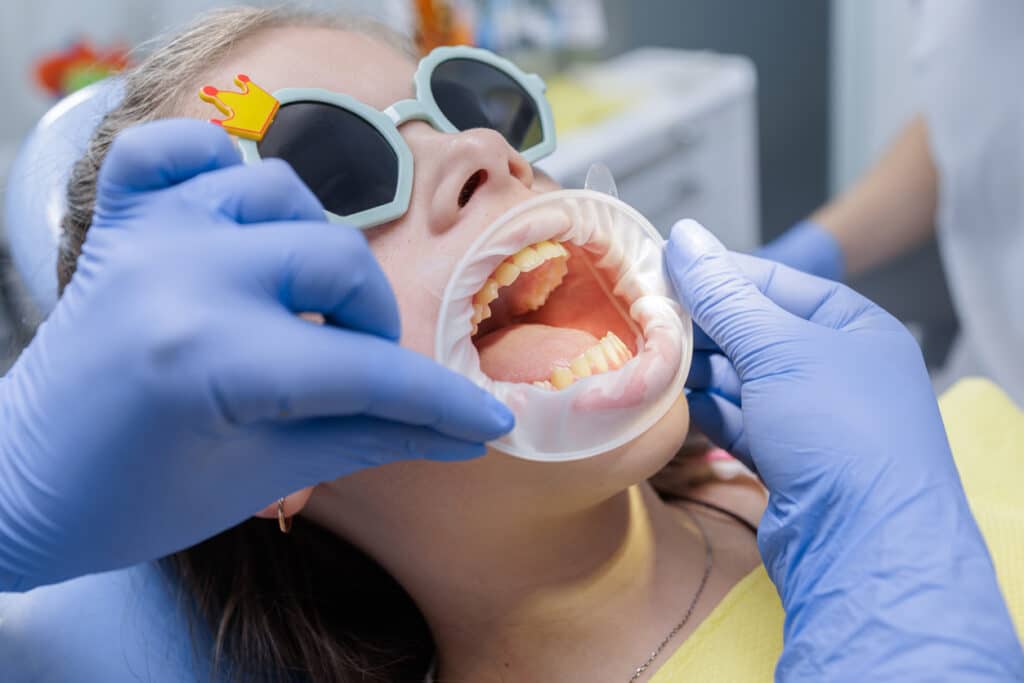
A professional dental fluoride treatment at Chatham Family & Implant Dentistry is a highly concentrated mineral varnish applied directly to your teeth immediately following a dental cleaning. This rapid remineralization therapy fortifies your enamel, reverses microscopic decay, and significantly reduces temperature sensitivity by blocking exposed dentin tubules after plaque and tartar have been removed.
How Fluoride Transforms Your Enamel at the Microscopic Level
Your tooth enamel is the hardest substance in your body. Under a microscope, it actually looks more like a sponge. Every time you sip a sugary coffee or an acidic sports drink, you trigger an “acid attack.” This acid strips essential calcium and phosphate from those microscopic pores, leaving the tooth vulnerable to decay. A post-cleaning fluoride varnish acts as an immediate biological rescue mission. The highly concentrated fluoride molecules penetrate those open, freshly cleaned pores and chemically bond with your remaining natural minerals. Together, they create a brand-new compound called fluorapatite. This upgraded version of your enamel is significantly denser, stronger, and far more resistant to future acid attacks than your original tooth structure. Medical literature supports the view that, since the topical benefits of fluoride are as good as those of systemic use but the risks are maximal with ingestion, the ideal recommendation is to limit fluoride to dentifrices and mouthwashes [1] (Unde et al., 2018). Notably, you are leaving our clinic with stronger teeth than you had when you arrived.
Why Busy Adults Need Fluoride Just as Much as Kids
Medical evidence supports that fluoride toothpaste, rinses, and varnish applications have proven their effectiveness [2] (Aoun et al., 2018). We often view cavity prevention strictly as a childhood issue, but your dental risks actually evolve as you enter adulthood. If you are a busy professional navigating life in Chatham County, your daily habits put massive stress on your enamel. High stress levels frequently lead to nocturnal teeth grinding (sleep bruxism), which creates microscopic stress fractures across your bite. Furthermore, hundreds of common daily medications cause severe dry mouth. Without an adequate flow of saliva to naturally wash away acid, your adult teeth become sitting ducks for rapid root decay. A quick, two-minute fluoride application at the end of your routine visit provides the vital, invisible protective barrier that your busy lifestyle strips away.
A table that compares preventive measures
Defense type | Average cost | Fluoride concentration | Application frequency | Best used for |
Professional varnish | Low add-on fee | Very high | Every 6 months | Immediate post-cleaning remineralization |
Prescription toothpaste | 20-30 USD | High | Daily | Adults with a history of rampant decay |
OTC mouthwash | 5-10 USD | Low | Daily | Routine daily maintenance between bi-annual clinic visits |
Nano-hydroxyapatite | 15 – 25 USD | Fluoride-free alternative | FDaily | Patients seeking biomimetic |
Maximizing Your Varnish
Clinical literature supports fluoride varnish (FV) as an effective preventive intervention to reduce the incidence and increment of caries [3](Almalki et al., 2025). Modern professional varnishes are incredibly convenient because they adhere to your teeth instantly. However, to achieve the highest possible return on your preventive investment, you should follow a simple 24-hour protocol once you leave our Pittsboro office. First, skip the crunchy foods like tortilla chips or hard nuts for the rest of the afternoon, as heavy friction can prematurely scrape the varnish off your teeth. Second, avoid extreme temperatures; hot soups or teas can melt the resin barrier before the minerals fully absorb into your enamel. Finally, skip your evening brushing and flossing routine just for one night. Leaving the varnish completely undisturbed while you sleep allows the fluoride to continuously penetrate and harden your enamel for maximum long-term strengthening.
Is Professional Fluoride Safe for Your Family?
The professional fluoride varnish used at Chatham Family & Implant Dentistry is overwhelmingly supported by the American Dental Association and decades of rigorous clinical research. Unlike older liquid fluoride rinses that young patients occasionally swallow by accident, our modern varnish is meticulously painted directly onto your teeth in highly controlled, tiny doses. Because it hardens on contact with your saliva, it stays exactly where it belongs and does not enter your digestive system. It is a completely safe, minimally invasive therapy designed strictly to protect your localized oral health without causing systemic side effects.
Combining Fluoride with Teeth Whitening and Clear Aligners
Professional teeth whitening is a fantastic way to brighten your smile, but the bleaching gels temporarily open the pores in your enamel, which can cause annoying “zingers” of temperature sensitivity. Applying a fluoride varnish after your whitening treatment immediately seals those pores, giving you a brilliant smile without the painful aftershocks. Similarly, if you are straightening your teeth with clear aligners (like Invisalign), your plastic trays can accidentally trap cavity-causing bacteria against your teeth all day long. Adding a fluoride boost during your routine cleanings helps keep your enamel rock-solid and cavity-free beneath your aligners, ensuring a flawless, healthy result when your orthodontic treatment is complete.
FAQS
1. How long do I have to wait to eat or drink after a fluoride varnish?
Unlike the old-school foam fluoride trays that forced you to fast for hours, modern fluoride varnishes dry on contact with your saliva. You can eat and drink immediately after leaving our Pittsboro clinic! We simply advise avoiding extremely hot beverages (like hot coffee) and crunchy/sticky foods for about 4 to 6 hours to let the varnish fully absorb into the enamel.
2. Does adult dental insurance pay for fluoride treatments?
Most traditional dental insurance plans cut off 100% fluoride coverage once a patient turns 18. However, due to the proven clinical benefits of adult remineralization, some progressive policies are beginning to cover it for adults with a documented “high caries risk.” Our front desk team will gladly perform a complimentary benefits check before your visit.
3. Can a fluoride treatment fix an existing cavity?
It depends on the stage of the cavity. If the decay is in the earliest “micro-cavity” phase (demineralization), a professional fluoride treatment can absolutely remineralize the enamel and reverse the damage. However, if the decay has already created a physical hole in the tooth structure, fluoride cannot grow new enamel; you will need a minimally invasive composite filling.
About The Author
Dr. Colin Barbaro, DDS, provides comprehensive general and cosmetic dentistry at Azalea Dental in Wilmington, NC. With advanced surgical training from a VA hospital residency, he specializes in implant placement, TMJ therapy, restorative care, and endodontics. He is committed to delivering safe, evidence-based solutions that keep patients comfortable and informed at every step.
References
[1] Unde, M. P., Patil, R. U., & Dastoor, P. P. (2018). The Untold Story of Fluoridation: Revisiting the Changing Perspectives. Indian journal of occupational and environmental medicine, 22(3), 121–127. https://doi.org/10.4103/ijoem.IJOEM_124_18
[2] Aoun, A., Darwiche, F., Al Hayek, S., & Doumit, J. (2018). The Fluoride Debate: The Pros and Cons of Fluoridation. Preventive nutrition and food science, 23(3), 171–180. https://doi.org/10.3746/pnf.2018.23.3.171
[3] Almalki, A. S., Alshahrani, O. S., Aljoaid, F. A., Alrwiali, M. A., Alrais, R. A., Alfuhigi, A. B., Alfehaid, R. A., Daghriri, R. M., Alwably, A. N., Alenazi, G. M., & Alasmari, A. A. (2025). Effectiveness of Various Fluoride Varnishes in Preventing Dental Caries in Children and Adolescents: A Systematic Review of Evidence From Educational Settings. Cureus, 17(11), e96323. https://doi.org/10.7759/cureus.96323