
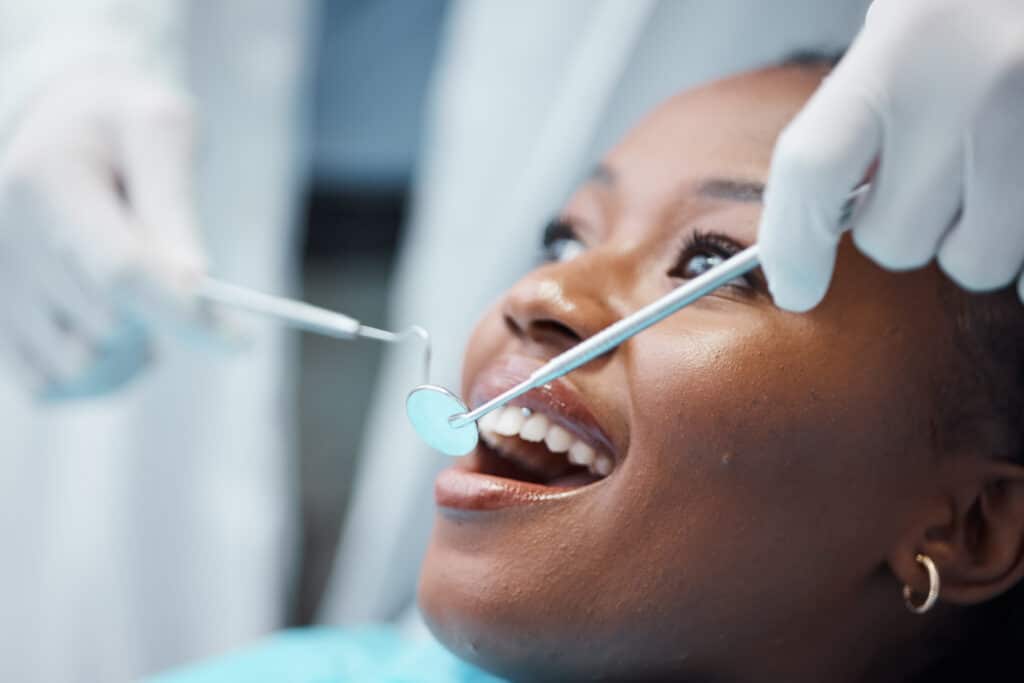
A regular teeth cleaning (prophylaxis) is a preventive measure focusing on removing plaque and tartar above the gumline in healthy mouths and is performed here at Chatham Family & Implant Dentistry. In contrast, a deep cleaning (scaling and root planing) is a specialized periodontal treatment that removes hardened bacterial buildup below the gumline to halt active gum disease.
The Hidden Dangers of Delaying Periodontal Therapy
Medical literature indicates that procrastination has different relationships with past, present, and future dental attendance and could play a role in oral health behavior [1] (Steinvik et al., 2023). Many patients wonder whether they can simply put off a recommended deep cleaning and stick to standard cleanings. Unfortunately, periodontitis is an active, progressive infection. When you delay scaling and root planing, the bacteria trapped beneath your gumline release toxins that slowly dissolve the jawbone supporting your teeth. Because bone loss is completely painless in its early stages, you might not notice a problem until your teeth actually become loose. Furthermore, ignoring this infection forces your immune system into chronic overdrive. Medical studies heavily link untreated gum disease to wider systemic health issues, including worsened diabetes complications and an increased risk of cardiovascular events. Regular preventive cleaning simply cannot stop this bacteria; only a deep cleaning can remove the source of the infection and protect your whole-body health.
Table that compares regular and deep cleanings
Feature | Regular cleaning | Deep cleaning |
Clinical need | Prevention | Active treatment of gum disease |
Treatment area | Above the gumline | Below the gumline |
Cost | Lower cost and often covered by insurance | Moderate and partially covered by insurance |
Maintenance level | Return every 6 months | Every 3 to 4 months |
Anesthesia used | Rarely | Local anesthesia is standard |
What Actually Happens to Your Gums During a Deep Cleaning?
Understanding the biology behind a deep cleaning takes the mystery out of the procedure. When tartar sits below the gumline, it acts like a splinter in your skin, causing your gums to swell, bleed, and pull away. Clinical literature indicates that scaling and polishing are also frequently provided to patients, irrespective of their risk of developing periodontal disease [2] (Lamont et al., 2018). During scaling and root planing, we are physically removing that “splinter.”
- The Scaling Phase: We break down the hardened calculus (tartar) and flush out the harmful bacterial endotoxins that cause inflammation.
- The Root Planing Phase: We smooth the porous surfaces of your tooth roots.
Once the rough tartar and bacteria are gone, your body’s natural healing response takes over. The chronic inflammation drops almost immediately. Over the next few weeks, your swollen gum tissue will begin to shrink, firm up, and tightly reattach to the smooth, clean tooth roots, effectively closing the hazardous pockets.
Post-Treatment Care: How to Heal Faster at Home
Because a deep cleaning is a non-surgical therapy, recovery is highly manageable and usually requires zero downtime. However, your gums will be tender for a few days. To accelerate your healing and ensure the best results, follow this simple 48-hour protocol:
- The Salt Water Rinse: Dissolve half a teaspoon of salt into 8 ounces of warm water. Gently rinse your mouth 2 to 3 times a day to soothe the tissue and naturally draw out inflammation. Clinical evidence suggests that Saltwater rinses are as efficient as 0.12% chlorhexidine in reducing inflammation following minimal invasive periodontal surgery [3] (Gupta et al., 2021).
- Dietary Adjustments: Stick to a softer diet for the first two days. Avoid sharp, crunchy foods (like chips or nuts) and extremely hot or spicy meals that can irritate the healing gums.
- Gentle Hygiene: You must continue brushing and flossing. Just use a soft-bristled toothbrush and apply gentle pressure around the treated areas to avoid disrupting the reattaching tissue.
The "Periodontal Maintenance" Phase Explained (The 90-Day Rule)
One of the biggest frustrations patients have is transitioning from a standard 6-month cleaning schedule to a 3- to 4-month Periodontal Maintenance schedule. It is totally normal to wonder if this extra frequency is truly necessary. The answer lies in the biological lifecycle of oral bacteria. Once you have a history of gum disease, the aggressive bacteria that cause bone loss can recolonize your gum pockets within 90 to 120 days. If we wait 6 months to clean your teeth, that bacteria has already been actively damaging your gums and bone. By visiting every 3 to 4 months, our hygienists disrupt the bacteria before they can colonize and cause new damage. This specialized maintenance is the absolute key to keeping your natural teeth for a lifetime.
How Modern Dental Technology Makes Deep Cleanings Comfortable
If you are putting off treating your gum disease because of stories you heard decades ago about painful “gum scraping,” it is time for a modern update. At Chatham Family & Implant Dentistry, your comfort is never an afterthought. We use advanced, tissue-sparing technology to make your visit stress-free:
- Precision Anesthetics: We use highly effective, localized numbing agents so you feel absolutely no sharp pain during the procedure, only mild pressure.
- Ultrasonic Scalers: Instead of relying entirely on manual hand instruments, we use high-tech ultrasonic devices. These tools use high-frequency micro-vibrations and a gentle stream of water to effortlessly blast away hard tartar.
- Shorter Appointment Times: This technology is incredibly efficient, meaning you spend significantly less time in the dental chair and can confidently head right back to work or your family schedule immediately after your visit.
FAQS
1. Can I refuse a deep cleaning and just get a regular one?
If you have been diagnosed with periodontal disease (gum pockets over 4mm), a regular cleaning is actually considered medical negligence. Polishing the top of the tooth while leaving active infection trapped beneath the gums can cause gum disease to worsen rapidly.
2. Will my gums reattach to my teeth after scaling and root planing?
Yes. Once the hardened tartar and bacteria are cleared out and the tooth roots are smoothed, the inflammation stops. This allows healthy gum tissue to firm up and tightly reattach to the teeth over the following weeks.
3. Why do I need to come back every 3 months after a deep cleaning?
Gum disease is managed, not cured. Once you have a history of periodontitis, the bacteria can repopulate the pockets in roughly 90 days. A 3- to 4-month periodontal maintenance schedule disrupts these bacteria before they can cause further bone loss.
References
[1] Steinvik, L. M., Svartdal, F., & Johnsen, J. K. (2023). Delay of Dental Care: An Exploratory Study of Procrastination, Dental Attendance, and Self-Reported Oral Health. Dentistry journal, 11(2), 56. https://doi.org/10.3390/dj11020056
[2] Lamont, T., Worthington, H. V., Clarkson, J. E., & Beirne, P. V. (2018). Routine scale and polish for periodontal health in adults. The Cochrane database of systematic reviews, 12(12), CD004625. https://doi.org/10.1002/14651858.CD004625.pub5
[3] Gupta S, Jain A, Singla M. Is saltwater mouth rinse as effective as chlorhexidine following periodontal surgery?. Evid Based Dent. 2021;22(4):130-131. doi:10.1038/s41432-021-0227-6