
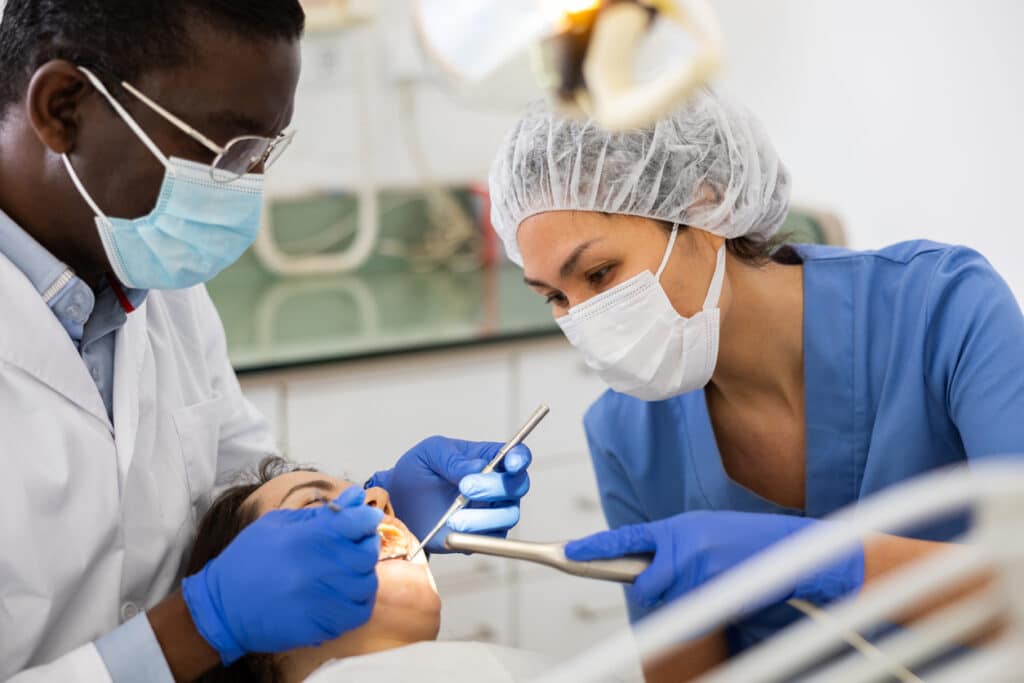
The dental hygiene team at Chatham Family & Implant Dentistry is a specialized group of licensed clinical professionals dedicated to preventive oral healthcare. They provide gentle ultrasonic cleanings, active periodontal therapy, and personalized health coaching to protect both your smile and your long-term systemic wellness.
Your Hygienist as a disease finder
Many patients think a dental cleaning is just about scraping away plaque and removing coffee stains. In reality, your dental hygienist is looking for signs of disease. Because they spend the most uninterrupted, one-on-one time with you, they are almost always the first medical professionals to spot silent, underlying systemic health issues. Before they even pick up a toothbrush, our hygienists perform a comprehensive scan of your oral tissues. They look for the earliest signs of oral cancer on your tongue and throat. They evaluate your airway for signs of sleep-disordered breathing. Because your gums are a direct gateway to your bloodstream, they also connect the dots between chronic gum inflammation and your overall heart health. By monitoring your baseline every six months, your hygienist acts as the first line of defense for your total-body wellness.
Table that compares roles in dental care
Clinical role | Primary responsibility | Interaction frequency | Maintenance level |
Dental hygienist | Preventive cleanings. Periodontal therapy and patient education | High | Long-term |
Resident dentist | Diagnostics, restorations, oral surgery, and final exams | Moderate | Needs-based and surgical |
Dental assistant | Prepping rooms, sterilizing tech, and assisting the doctor | Moderate | Supportive |
Advanced Desensitization Techniques
The medical literature suggests that dentin desensitizers are products used by dental professionals to treat dentinal hypersensitivity [1] (Clark et al., 2016). If you have sensitive teeth or receding gums, the sudden shock of freezing cold water during a rinse is enough to make you dread your appointment. Our hygiene team completely eliminates this temperature shock. They understand that clinical comfort requires a highly personalized approach, and they actively modify their techniques to match your exact sensitivity levels. Our treatment rooms in Pittsboro are equipped with temperature-regulated water systems. By using lukewarm water through our ultrasonic tools, your hygienist keeps your dental nerves calm and relaxed. Furthermore, before your cleaning even begins, your hygienist will map out your specific areas of gum recession. They completely avoid aggressive manual scraping in these delicate zones, relying instead on powerful, pleasant-tasting topical numbing gels. You get a remarkably deep clean with absolutely zero sharp pinches or cold-water jolts.
The No-Tears Pediatric Hygiene Approach
Taking a toddler or an anxious teenager to the dentist can feel like a stressful negotiation. If a child’s first encounter with a dental hygienist is rushed or intimidating, it can trigger dental phobia. Clinical literature suggests that Dental anxiety/phobia is often described as a vicious cycle involving avoidance of dental care, poor oral health, and psychosocial effects [2] (Wide et al., 2021). Our hygiene team takes immense pride in creating a tear-free, sensory-safe environment for the youngest smiles in Chatham County. For toddlers, turn cleaning into a fun, educational game by letting your child touch the mirror and feel the water spray on their hand before any water enters their mouth. For neurodivergent children with high sensory sensitivities, our hygienists happily adapt the environment. They can dim the overhead lights, skip heavily flavored polishing pastes, and use ultra-quiet brushing techniques. By going exactly at your child’s pace, our hygiene team builds immediate trust, ensuring your kids actually look forward to their next visit.
No More Flossing Lectures
If string floss simply does not fit into your busy life, our hygienists will not scold you. Instead, they pivot to find a practical solution that actually works for you. Our team serves as your personal health coaches. They take the time to learn about your daily routine, evaluate your natural saliva flow, and assess your specific enamel density. Based on your unique biology, they build a bespoke at-home care plan for you. They might recommend swapping your manual toothbrush for a sonic toothbrush, using a water flosser to easily clean tight spaces, or upgrading to a nano-hydroxyapatite toothpaste to safely remineralize your teeth. You leave our office feeling empowered and equipped, rather than embarrassed.
Why Our Hygienists Are Top-Tier Clinicians
The dental field evolves rapidly, and outdated techniques simply do not cut it anymore. Our hygiene team is deeply committed to relentless, ongoing clinical training to ensure you receive the highest standard of modern care. Throughout the year, our hygienists dedicate countless hours to advanced Continuing Education (CE). They undergo rigorous, specialized training in modern periodontal maintenance, advanced ultrasonic scaling techniques, and the latest digital diagnostic software. They stay on the absolute cutting edge of dental science so that they can bring the safest, fastest, and most effective preventive treatments back to our Pittsboro clinic. When you sit in their chair, you are being treated by true clinical leaders.
FAQS
1. Can I request the same hygienist for every visit?
Absolutely. We believe that continuity of care is the secret to a healthy smile. Seeing the same hygienist every six months allows them to intimately learn your specific sensitivities, track your genetic health baseline, and build a lasting, trusting relationship. Just let our front desk know your preference when booking.
2. Why do I spend more time with the hygienist than the dentist?
Your hygienist is the dedicated specialist for plaque removal and gum health. Because thoroughly cleaning all surfaces of your teeth and performing vital preventive maintenance takes time, these tasks are managed during the first 45 minutes of your visit. Once your teeth are perfectly clean, the dentist conducts the final diagnostic exam.
3. What is the difference between a dental hygienist and a dental assistant?
A dental assistant supports the dentist during restorative procedures (like passing instruments or taking impressions). A dental hygienist is an independent, licensed clinician who performs medical treatments directly on patients, such as administering local anesthetics, scaling tartar, and treating active gum disease.
About The Author
Dr. Colin Barbaro, DDS, provides comprehensive general and cosmetic dentistry at Azalea Dental in Wilmington, NC. With advanced surgical training from a VA hospital residency, he specializes in implant placement, TMJ therapy, restorative care, and endodontics. He is committed to delivering safe, evidence-based solutions that keep patients comfortable and informed at every step.
References
[1] Clark, D., & Levin, L. (2016). Non-surgical management of tooth hypersensitivity. International dental journal, 66(5), 249–256. https://doi.org/10.1111/idj.12247
[2] Wide, U., & Hakeberg, M. (2021). Treatment of Dental Anxiety and Phobia-Diagnostic Criteria and Conceptual Model of Behavioural Treatment. Dentistry journal, 9(12), 153. https://doi.org/10.3390/dj9120153