
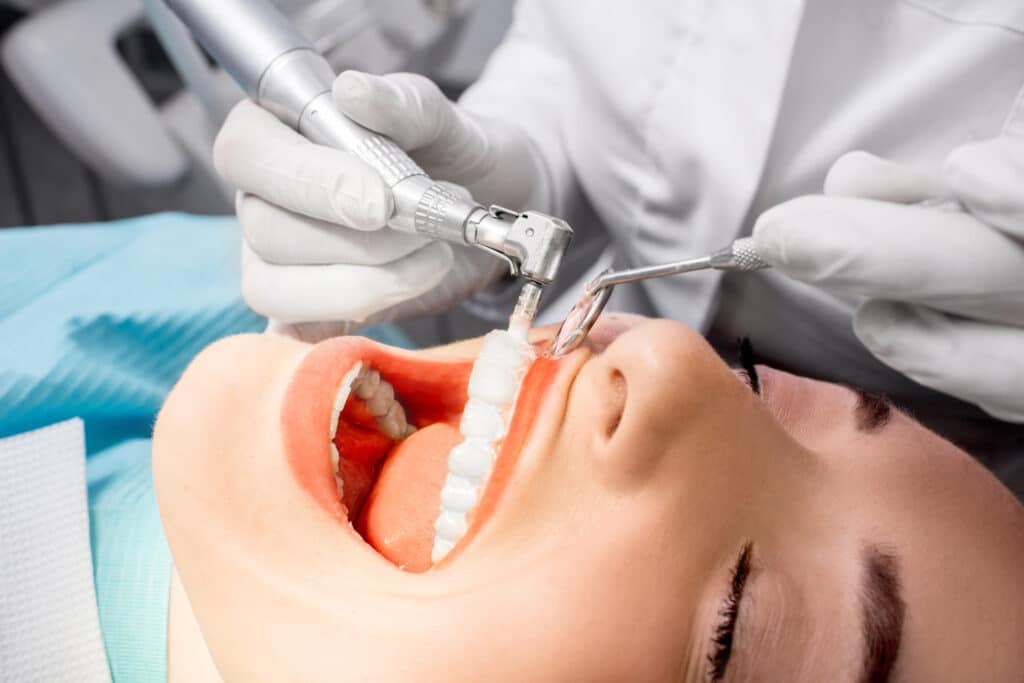
For most Chatham patients, a professional teeth cleaning is recommended every six months to maintain optimal oral health. However, individuals with a history of gum disease, heavy plaque buildup, or underlying health conditions require specialized periodontal maintenance every three to four months to prevent irreversible bone loss.
Five Warning Signs You Should Not Wait Six Months for Your Next Cleaning
Even if you are scheduled for a standard six-month visit, your mouth might be sending you urgent signals that it needs professional attention right now. If you are experiencing any of the following symptoms, do not wait for your calendar reminder to book your next visit:
- Bleeding: If you notice blood when brushing or flossing, this may be an indicator of gingivitis.
- Persistent Bad Breath: Clinical literature supports that halitosis or bad breath is a symptom of gum disease [1] (National Institute of Dental and Craniofacial Research, 2018).
- Sudden Hot or Cold Sensitivity: As plaque erodes your enamel or causes your gums to recede, the sensitive roots of your teeth become exposed to temperature changes.
- A “Fuzzy” Feeling on Your Teeth: Run your tongue over your teeth right now. If they feel rough or fuzzy rather than glass-smooth, plaque has likely already begun to calcify.
- Puffy or Discolored Gums: Gums should be firm and light pink. Red, swollen, or tender gums are actively fighting an infection. In contrast, healthy gingiva is typically described as firm, pink, and knife-edged at the margins.
Table that compares cleaning frequencies
Patient profile | Recommended frequency | Out-of-pocket cost | Long-term durability |
Standard prophylaxis | Every 6 months | $0 | Low maintenance |
Periodontal maintenance | Every 3 to 4 months | Low co-[pay | High Maintenance |
Orthodontic care | 3 to 4months | $0 | Temporary high maintenance |
The Oral-Systemic Connection: How Clean Teeth Protect Your Heart
For health-oriented patients, understanding the mouth-body connection is crucial. Your mouth is not isolated from the rest of your body; it is the known gateway to your bloodstream. In fact, transient bacteremia has been well documented even from routine activities like toothbrushing in patients with periodontal disease [2] (Santos et. al, 2024)When tartar buildup causes your gums to become inflamed and bleed, it creates a nidus for harmful oral bacteria to enter your vascular system. Decades of medical research have directly linked severe gum disease to an increased risk of cardiovascular disease, strokes, and complications in managing Type 2 Diabetes.
Adapting Your Cleaning Schedule Through Life's Stages:
Your ideal cleaning frequency is not static; it changes as you move through different chapters of your life. Hormonal changes and natural aging profoundly affect how your gums react to plaque.
- Pregnancy: Surges in progesterone make your gums hyper-sensitive to plaque, often leading to pregnancy gingivitis. Clinical evidence supports a connection between elevated plasma levels of pregnancy hormones and a decline in periodontal health [2] (Wu et al., 2015).
- Menopause: Hormonal shifts can cause dry mouth (xerostomia). Because saliva is your body’s natural defense against cavities, less saliva means tartar builds up much faster.
- Seniors and Medication: Many prescription medications prescribed to our older Chatham patients list dry mouth as a side effect. A proactive 3- or 4-month cleaning schedule helps prevent rampant root decay in your later years.
Demystifying the Dental Chair: Step-by-Step Comfort
If dental anxiety has prevented you from scheduling your routine cleanings, you are not alone. Many patients fear the scraping and discomfort of outdated dental techniques. Modern cleanings at our practice, however, are designed entirely with your ease in mind. We use ultra-quiet ultrasonic scalers to effortlessly break tartar apart, eliminating the need for aggressive manual scraping. We then polish your teeth using a special paste that buffs away stubborn coffee and wine stains. Lastly, a targeted fluoride treatment acts as a defensive barrier, remineralizing your enamel so that your teeth stay strong long after you leave our office.
Extending the Polish: At-Home Care Between Your Chatham Visits
A professional cleaning hits the “reset” button on your oral health, but what you do in your own bathroom dictates how long that clean feeling lasts. To protect your investment between visits, upgrade your daily routine. Swap your manual toothbrush for a sonic electric toothbrush, which disrupts plaque far more efficiently. Incorporate a water flosser into your nightly routine to flush out food particles from the deep pockets your toothbrush cannot reach. Finally, use a tongue scraper every morning to remove sulfur-producing bacteria. When you pair excellent home care with your custom professional cleaning schedule, you guarantee a bright, pain-free smile year-round.
FAQS
1. Can I skip my 6-month dental cleaning if I brush and water-floss twice a day?
Even with the best electric toothbrush and water flosser, it is virtually impossible to remove 100% of plaque from the microscopic grooves of your teeth and below the gumline. Professional tools are required to safely remove the hardened calculus that inevitably builds up over a six-month period.
2. Why did my hygienist recommend a cleaning every 3 months instead of 6?
If bacteria have created pockets deeper than 3 millimeters around your teeth, you have active periodontal disease. Because this specific bacteria repopulates and begins destroying bone tissue every 90 to 120 days, a 3-month cleaning interval is biologically necessary to halt the infection.
3. Does a periodontal maintenance cleaning hurt more than a regular cleaning?
Not at all. Periodontal maintenance involves cleaning below the gumline and uses modern ultrasonic instruments and topical numbing gels.
References
[1] National Institute of Dental and Craniofacial Research. (2018, October). Periodontal (Gum) Disease. Www.nidcr.nih.gov. https://www.nidcr.nih.gov/health-info/gum-disease
[2] Santos WS, Solon IG, Luiz. Impact of Periodontal Lipopolysaccharides on Systemic Health: Mechanisms, Clinical Implications, and Future Directions. Molecular Oral Microbiology. Published online November 27, 2024. doi:https://doi.org/10.1111/omi.12490
[3] Wu, M., Chen, S. W., & Jiang, S. Y. (2015). Relationship between gingival inflammation and pregnancy. Mediators of inflammation, 2015, 623427. https://doi.org/10.1155/2015/623427