
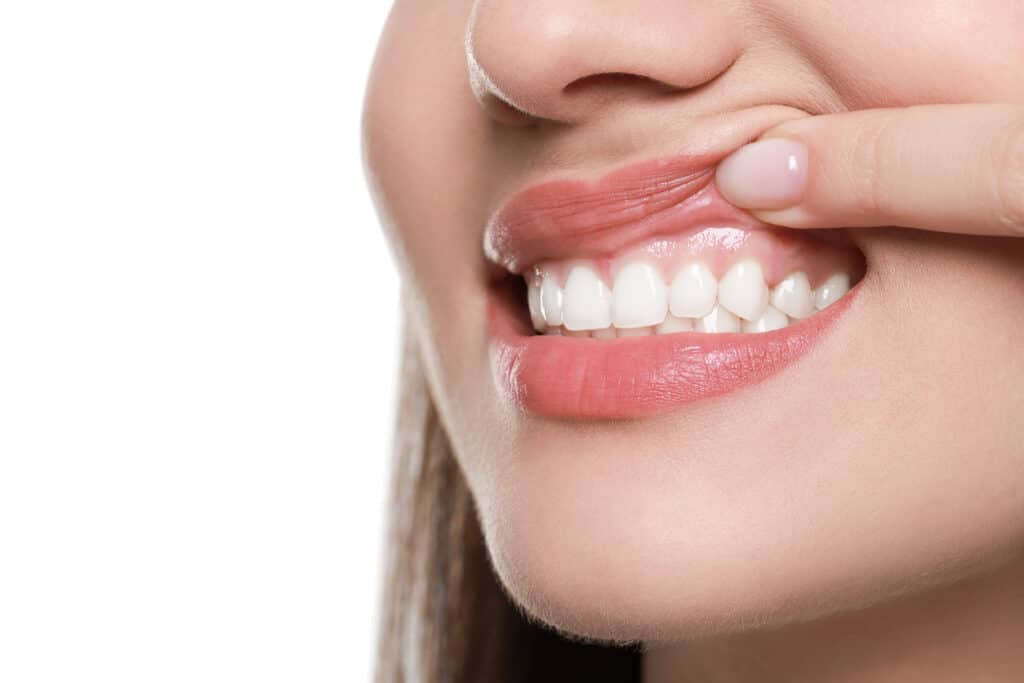
Periodontal care within a family dentistry practice is a comprehensive, multi-generational approach to diagnosing, treating, and managing gum disease. Clinical literature supports that diagnosis relies on clinical signs such as gingival bleeding, periodontal pocketing, radiographic bone loss, and tooth mobility [1] (Gasner et al., 2025). By combining scaling and root planing, specialized maintenance cleanings, and your children’s preventive checkups under the same roof, families secure continuous, specialist-level oral healthcare without the hassle of outside referrals.
Breaking the Generational Cycle of Dental Anxiety
Medical literature supports that parents’ fears/anxieties about dentistry are associated with adolescents’ dental fear in a manner suggestive of intergenerational transmission [2] (McNeil et al., 2019). Dental anxiety is rarely spontaneous; it is usually a learned behavior. If a child senses that their parent is terrified of receiving a deep cleaning, that child will inherently view the dental chair as a place of danger. A multi-generational family clinic empowers you to break this cycle through observational learning. Because our clinical team uses ultra-quiet ultrasonic scalers and powerful topical anesthetics for periodontal therapies, your treatment is completely comfortable. When your teenager or toddler watches you calmly complete your specialized gum maintenance without stress or pain, it normalizes the experience for them. By treating your gum disease in a judgment-free, family-centered environment, you actively model bravery and ensure your kids grow up with zero fear of the dentist.
A table that compares routine and periodontal care
Care category | Target patient profile | Out-of-pocket cost | Maintenance level | Long-term durability |
Standard pediatric cleaning n | Children with healthy gums | $0 | Low | High |
Adult prophylaxis | Adults with no bone loss | Low copay | Low | High |
Active deep cleaning | Adults with active gum infections | Moderate | High | 3-5 years |
Periodontal maintenance | Adults managing a history of disease | Low to moderate | hIgh | Lifetime stability |
The Oral-Systemic Link: Protecting the Heart of the Household
Clinical literature supports that there is a relationship between periodontitis and diabetes, as well as dental caries and hypertension [3] (Natarajan et al., 2025). Untreated periodontal disease can create an open gateway for aggressive oral bacteria to enter your bloodstream. Decades of medical literature directly link this chronic systemic inflammation to cardiovascular disease, difficulty managing blood sugar, and a weakened immune system. You cannot pour from an empty cup; if your immune system is constantly fighting a silent infection in your mouth, your daily energy levels will plummet. By maintaining your strict 3-month periodontal maintenance schedule at our Pittsboro clinic, you actively lower your body’s inflammatory burden. Treating your gum disease is a direct investment in your heart health, ensuring you have the energy and vitality to keep up with your busy family.
How Shared Household Diets Influence Periodontal Risks
Gum disease is a bacterial infection, and those bacteria feed entirely on the carbohydrates and sugars in your daily diet. Because families typically share a pantry, they also share the same dietary risk factors for periodontitis. If your household relies heavily on frequent snacking, acidic sports drinks after local youth games, or sticky processed foods, the entire family’s gum health is at risk. During your family’s synchronized dental visits, our hygienists serve as your personal health coaches. We help you identify hidden periodontal triggers in your grocery run and recommend “food sequencing” strategies. Simply swapping continuous grazing for structured meals starves the bacteria and protects everyone’s gum health under your roof.
Navigating Teen Orthodontics Without Triggering Gum Disease
If your teenager is currently wearing braces or clear aligners, their risk for severe gum inflammation skyrockets. Traditional metal brackets and orthodontic wires create hundreds of microscopic physical traps for plaque. Even with excellent brushing habits, it is incredibly difficult for a teen to remove all the bacteria hiding near the gumline, which can lead to a condition known as “puberty gingivitis.” Because our doctors provide comprehensive family care, we do not let your teen’s gum health fall through the cracks during their orthodontic years. We can proactively upgrade your teenager to a highly targeted 3- or 4-month cleaning schedule while they wear braces. Our ultrasonic tools safely flush bacteria out from underneath their wires, ensuring that when their braces finally come off, their gums are firm, healthy, and perfectly intact.
The Seamless Transition from Pediatric to Adult Gum Care
Your gum tissue changes biologically as you age. What starts as mild, hormone-induced gingivitis in a middle schooler can quickly evolve into destructive adult periodontitis if it is not carefully monitored. The biggest flaw of pediatric-only dental clinics is that patients “age out” at 18. This forces young adults to find a new provider just as their risk for adult gum disease begins to peak, often resulting in years of lapsed care and lost medical records. At Chatham Family & Implant Dentistry, your child never has to transfer clinics. We have their complete 3D imaging baseline from childhood on file. This seamless timeline allows our doctors to precisely monitor their gum attachment levels year after year, intervening at the very first microscopic sign of bone loss as they enter adulthood.
FAQS
1. Are gum disease traits actually passed down to my children?
While the specific bacteria that cause gum disease are transmissible (often through sharing utensils or food), the genetic predisposition to severe inflammation is hereditary. If parents struggle with chronic periodontitis, their children have a statistically higher risk of developing it, making proactive family screenings essential.
2. Can I schedule my 3-month periodontal maintenance at the same time as my teen's checkup?
Absolutely. We specialize in family block scheduling. We can coordinate our hygienists so your specialized 3-month periodontal visit aligns perfectly with your teenager’s standard 6-month cleaning, saving you an extra trip to the clinic.
3. Do general family dentists use the same tools as a periodontist for deep cleanings?
Yes. Our clinical team utilizes the exact same advanced ultrasonic water scalers, high-definition 3D imaging, and localized anesthetics to gently and effectively remove calculus from deep beneath your gumline without the need for an outside referral.
About The Author
Dr. Colin Barbaro, DDS, provides comprehensive general and cosmetic dentistry at Azalea Dental in Wilmington, NC. With advanced surgical training from a VA hospital residency, he specializes in implant placement, TMJ therapy, restorative care, and endodontics. He is committed to delivering safe, evidence-based solutions that keep patients comfortable and informed at every step.
References
[1] Gasner NS, Schure RS. Periodontal Disease. [Updated 2025 May 12]. In: StatPearls [Internet]. Treasure Island (FL): StatPearls Publishing; 2026 Jan-. Available from: https://www.ncbi.nlm.nih.gov/books/NBK554590/
[2] McNeil, D. W., Randall, C. L., Cohen, L. L., Crout, R. J., Weyant, R. J., Neiswanger, K., & Marazita, M. L. (2019). Transmission of dental fear from parent to adolescent in an Appalachian sample in the USA. International journal of paediatric dentistry, 29(6), 720–727. https://doi.org/10.1111/ipd.12564
[3] Natarajan, P., Madanian, S., & Marshall, S. (2025). Investigating the link between oral health conditions and systemic diseases: A cross-sectional analysis. Scientific reports, 15(1), 10476. https://doi.org/10.1038/s41598-025-92523-6