
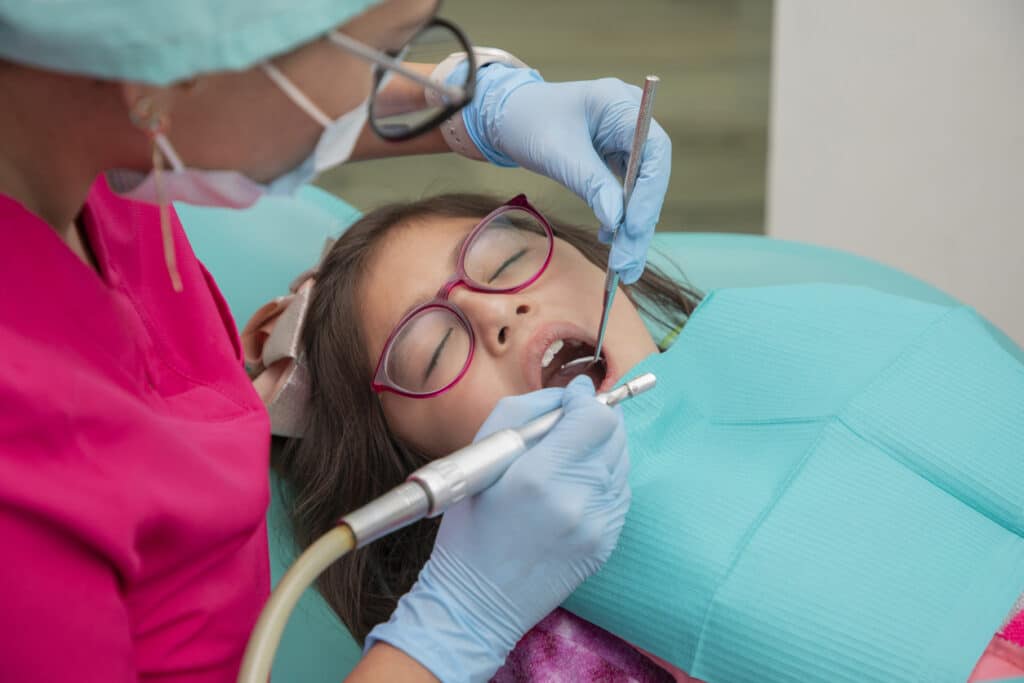
A pediatric dental cleaning at Chatham Damily & Implant Dentistry is a routine preventive measure that removes surface plaque and applies protective fluoride to growing teeth. In contrast, a deep cleaning (scaling and root planing) is an advanced periodontal therapy used to treat active gum disease, which is rare but possible in older teenagers.
Puberty Gingivitis: Why Shifting Hormones Make Teen Gums Swell
Clinical literature supports that during puberty, periodontal tissues may have an exaggerated response to local factors [1] (Chaitra et al., 2012). Most parents associate hormonal changes in teenagers with acne or mood swings, but these biological shifts also have a massive impact on their smiles. During puberty, a sudden surge in hormones increases the blood flow to the teenager’s gum tissue. This makes their gums hypersensitive and highly reactive to even the smallest microscopic amount of plaque. This condition, known as “puberty gingivitis,” is incredibly common. At our Pittsboro clinic, we never lecture your teenager or assume they are just being lazy with their toothbrush. Instead, our hygienists explain the biology behind what they are experiencing and provide customized, age-appropriate coaching to help them navigate this temporary phase without developing permanent gum damage.
A table that compares treatment options for children
Cleaning type | Best for | Cost | Durability |
Standard pediatric cleaning | Healthy kids and toddlers | Very low | Routine bi-annual visits |
Orthodontic maintenance cleaning | Teens with braces | Low to moderate | Every 3 to 4 months |
Adult deep cleaning | Patients with active bone loss | Moderate | High |
The Braces Factor: Preventing Plaque Traps During Orthodontic Treatment
Medical literature supports that Our findings show that gingival health can decline quickly once fixed orthodontic appliances are placed [2] (Ellampalli et al., 2025). If your child is currently undergoing orthodontic treatment to straighten their smile, their risk for gum inflammation skyrockets. Traditional metal brackets and wires create hundreds of tiny physical traps for food particles and aggressive oral bacteria. Even with the best manual brushing habits, it is virtually impossible for a teenager to remove 100% of the plaque hiding beneath their orthodontic wires. When this plaque sits on the teeth, it causes the gums to swell significantly, sometimes even growing over the brackets themselves. To prevent this, we often recommend adjusting your teenager’s preventative visits. Instead of a standard six-month cleaning, upgrading to a 3- or 4-month cleaning interval while they wear braces ensures that our hygienists can safely remove hidden tartar. This proactive step prevents severe gingivitis and ensures that when their braces finally come off, the enamel underneath is healthy, strong, and stain-free.
Sports Drinks and Gum Health: The Hidden Chatham County Culprit
Medical evidence supports that athletes that consume sports and energy drinks frequently and have poor oral health, despite self-reported good oral health and hygiene habits [3] (Khan et al., 2022). When parents think of foods that cause dental problems, candy is usually the first thing that comes to mind. However, for active kids participating in local Chatham County youth sports, the biggest threat to their gum health is often found right in their gym bag. Popular sports drinks are marketed as healthy hydration, but they are incredibly acidic and loaded with liquid sugar. When your child sips on a sports drink throughout an hour-long soccer game, their teeth and gums are held hostage in a constant state of acid erosion. This acid strips the protective layer from their teeth, allowing bacteria to multiply rapidly along the gumline. To protect their growing smiles, encourage your kids to hydrate primarily with local Pittsboro tap water during their games. If they do have a sports drink, instruct them to drink it quickly rather than sipping it slowly, and to rinse their mouth with water immediately afterward to neutralize the acid.
How We Adapt Cleaning Technology for Growing Smiles
If a child or teenager has sensitive, bleeding gums, the last thing they want is a dental hygienist aggressively poking at their mouth with sharp metal instruments. A bad experience during adolescence can easily trigger a lifetime of dental anxiety. At Chatham Family & Implant Dentistry, we completely adapt our clinical technology to match your child’s biological and emotional needs. For young patients experiencing early gingivitis, we retire the traditional, scraping hand tools. Instead, we utilize ultra-quiet ultrasonic water scalers on their lowest, gentlest settings. These high-tech wands use lukewarm water and micro-vibrations to effortlessly wash away plaque without causing any sharp pinches or cold-water shock. By pairing this gentle technology with our proven “Tell-Show-Do” communication method, we ensure your child feels completely safe, respected, and in control of their visit.
The Parents’ 7-Day At-Home Rescue Plan for Bleeding Gums
If you notice trace blood in the sink after your child brushes their teeth, you do not necessarily need to panic or rush in for an emergency dental visit. In most cases, early-stage gingivitis can be reversed right in your own bathroom. If your child’s gums look puffy, implement this simple 7-Day Rescue Plan:
- Ditch the Manual Brush: Upgrade your child to a sonic electric toothbrush. The automatic vibrations do all the heavy lifting, removing significantly more plaque from the gumline than manual scrubbing.
- Introduce the Water Flosser: Traditional string floss is incredibly frustrating for kids to use correctly. A countertop water flosser is much easier for them to handle and uses a targeted stream of water to safely blast bacteria out from between their teeth.
- The Saltwater Rinse: Have your child gently rinse with warm saltwater before bed. Salt acts as a natural anti-inflammatory, drawing out the swelling and soothing tender tissue.
FAQS
1. Do kids ever need deep cleanings?
Generally, no. Standard deep cleanings (scaling and root planing) treat bone loss, which is exceptionally rare in young children. However, older teenagers with chronic poor hygiene or severe orthodontic crowding may require a specialized periodontal intervention if active disease is present.
2. Does an orthodontic cleaning with braces count as a deep cleaning?
No. While cleaning around braces takes slightly longer and requires more meticulous attention from our hygienists, it is still considered a standard preventive cleaning (prophylaxis) as long as the gums remain healthy.
3. How can I stop my teenager's gums from bleeding?
Bleeding gums are the first sign of gingivitis. Do not let them stop brushing! Encourage them to use an electric toothbrush and a water flosser to flush out the hidden plaque, triggering the inflammation. If the bleeding persists for more than a week, book an appointment at our Pittsboro clinic so we can safely remove the localized tartar.
About The Author
Dr. Colin Barbaro, DDS, provides comprehensive general and cosmetic dentistry at Azalea Dental in Wilmington, NC. With advanced surgical training from a VA hospital residency, he specializes in implant placement, TMJ therapy, restorative care, and endodontics. He is committed to delivering safe, evidence-based solutions that keep patients comfortable and informed at every step.
References
[1] Chaitra, T. R., Manuja, N., Sinha, A. A., & Kulkarni, A. U. (2012). Hormonal effect on gingiva: pubertal gingivitis. BMJ case reports, 2012, bcr2012006193. https://doi.org/10.1136/bcr.2012.006193
[2] Ellampalli, H., Matmari, V., Srinivasan, S. R., Lotavath, J. R., & Sekar, P. (2025). Assessment and Evaluation of Oral Health in Orthodontic Patients: A Cross-Sectional Study. Cureus, 17(11), e98194. https://doi.org/10.7759/cureus.98194
[3] Khan, K., Qadir, A., Trakman, G., Aziz, T., Khattak, M. I., Nabi, G., Alharbi, M., Alshammari, A., & Shahzad, M. (2022). Sports and Energy Drink Consumption, Oral Health Problems and Performance Impact among Elite Athletes. Nutrients, 14(23), 5089. https://doi.org/10.3390/nu14235089