
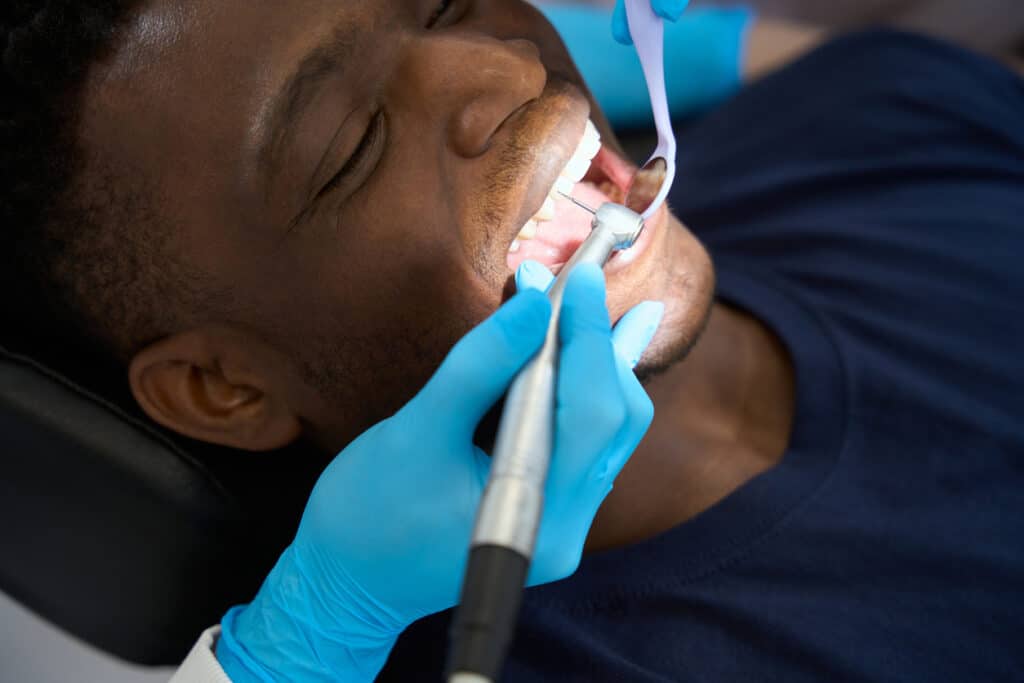
Deep teeth cleaning recovery typically takes 48 to 72 hours for initial tenderness and temperature sensitivity to subside. However, complete biological healing takes approximately four to six weeks of consistent, gentle at-home maintenance.
Nutrition for Faster Gum Healing: What to Eat in Chatham County
Medical literature supports that methods to optimize healing through dietary strategies present an attractive option for patients [1] (Lau et al., 2013). Our team at Chatham Family & Implant Dentistry knows you need to stick to a soft-food diet for the first 48 hours, but what you eat is just as important as the texture. Your gums need specific nutrients to rebuild the cellular tissue that was damaged by bacterial infection. Focus heavily on foods rich in Vitamin C and Omega-3 fatty acids, which act as natural anti-inflammatories. Smoothies loaded with spinach, soft scrambled eggs, and lukewarm soups are excellent choices. However, you must absolutely avoid highly acidic foods during your initial recovery. Ingredients like tomatoes, citrus fruits, and heavy spices will severely sting your raw, healing gum tissue. If you are grabbing a quick lunch around Pittsboro, skip the spicy salsa and opt for mild, room-temperature options to keep your dental nerves perfectly calm.
Table that compares at-home recovery tools
Recovery tool | Cost | Long-term durability | Maintenance level |
Warm saltwater rinses | Under $5 | Stops active swelling | Low |
Ultra-soft bristle brush | 5-10 dollars | Replaced every 3 months | Low |
Countertop water flosser | 40-90 dollars | 3-5 years | Moderate |
Prescription chlorhexidine rinse | 15-30 dollars | Short-term use | Low |
Navigating New Spaces: Cleaning the "Black Triangles"
Clinical evidence supports that rebuilding the pink gingival esthetic is an important issue in modern esthetic dentistry [2] (Singh et al., 2013). As your chronic inflammation disappears and your gums tighten around your tooth roots, you might notice small gaps appearing near the gumline between your teeth. Dentists call these “black triangles.” While they might look new to you, they were likely present before your procedure, but hidden by swollen, infected gum tissue. Cleaning these new spaces requires a slight upgrade to your routine. Traditional string floss might not be thick enough to sweep away the plaque in these gaps. Instead, we highly recommend adding an interdental brush (a tiny, cone-shaped brush) to your daily aftercare routine. Gently slide the brush between the teeth at the gumline to sweep out food particles. Never force the brush; if it does not fit easily, use your water flosser instead. Keeping these gaps pristine ensures the bacteria cannot recolonize.
Nighttime Aftercare: How to Sleep Comfortably Without Throbbing
Many patients feel perfectly fine during the day, only to experience an annoying, dull throb in their gums as soon as they go to bed. This happens because of simple gravity. When you lie completely flat, blood rushes to your head, increasing the blood pressure inside your healing gum tissue. To ensure you get a restful night of sleep without the throbbing, prop your head up with an extra pillow for the first two nights after your scaling and root planing. Keeping your head slightly elevated above your heart prevents blood from pooling in your jaw. Additionally, if you clench or grind your teeth due to stress (bruxism), let our clinical team know. Clenching puts massive pressure on freshly cleaned, tender tooth roots. Wearing a custom nightguard can act as a shock absorber while your mouth recovers.
The Nicotine Rule: Why Vaping and Smoking Stall Recovery
At Chatham Family & Implant Dentistry, we operate a strictly judgment-free zone. You will never get a lecture from us, but we do need to be honest about the biology of nicotine. Whether you smoke traditional cigarettes or use a vape, nicotine is a powerful vasoconstrictor, meaning it instantly shrinks your blood vessels. Your gums need a continuous supply of oxygen-rich blood to heal and reattach to your teeth. When you vape or smoke immediately after a deep cleaning, you starve your gum tissue of the oxygen it needs to recover. This significantly delays your healing time and keeps your teeth feeling sore for much longer. Clinical evidence supports that the heat from smoking and its toxic by-products such as nicotine, carbon monoxide, and hydrogen cyanide may impair healing [3] (Gajendra et al., 2023). For the absolute best results, try to pause all smoking or vaping for at least 48 to 72 hours after your procedure.
Normal Healing vs. Red Flags: When to Call Our Pittsboro Clinic
After any dental procedure, it is entirely normal to feel a bit anxious about what is happening in your mouth. Knowing the difference between standard biological healing and an actual emergency will give you total peace of mind.
- Normal Healing: You may experience mild temperature sensitivity, a dull ache that is easily managed with over-the-counter Ibuprofen, and a slight pink tint in your saliva when you brush for the first day or two.
- The Red Flags: If you experience severe facial swelling, heavy bleeding that does not stop when you apply pressure, a sudden fever, or extreme pain that keeps you awake, do not wait.
FAQS
1. When can I exercise after a deep cleaning?
You should avoid strenuous cardiovascular workouts and heavy weightlifting for at least 24 to 48 hours. Elevating your heart rate too soon can increase blood flow to your head, potentially causing your healing gums to throb or bleed prematurely.
2. When can I drink hot coffee again?
Because your freshly cleaned tooth roots are temporarily exposed to air, piping-hot coffee will cause a sharp jolt of sensitivity. We recommend waiting at least 48 hours before consuming extremely hot or ice-cold beverages. Stick to lukewarm drinks in the meantime.
3. Is it normal for my teeth to feel slightly loose after scaling?
Yes. Hardened tartar acts like a concrete cast around your teeth. When we remove that tartar, the teeth might feel slightly mobile for a few days. As your healthy gum tissue shrinks and reattaches tightly to the roots over the next few weeks, your teeth will quickly stabilize.
About The Author
Dr. Colin Barbaro, DDS, provides comprehensive general and cosmetic dentistry at Azalea Dental in Wilmington, NC. With advanced surgical training from a VA hospital residency, he specializes in implant placement, TMJ therapy, restorative care, and endodontics. He is committed to delivering safe, evidence-based solutions that keep patients comfortable and informed at every step.
References
[1] Lau, B. Y., Johnston, B. D., Fritz, P. C., & Ward, W. E. (2013). Dietary strategies to optimize wound healing after periodontal and dental implant surgery: an evidence-based review. The open dentistry journal, 7, 36–46. https://doi.org/10.2174/1874210601307010036
[2] Singh, V. P., Uppoor, A. S., Nayak, D. G., & Shah, D. (2013). Black triangle dilemma and its management in esthetic dentistry. Dental research journal, 10(3), 296–301.
[3] Gajendra, S., McIntosh, S., & Ghosh, S. (2023). Effects of tobacco product use on oral health and the role of oral healthcare providers in cessation: A narrative review. Tobacco induced diseases, 21, 12. https://doi.org/10.18332/tid/157203