
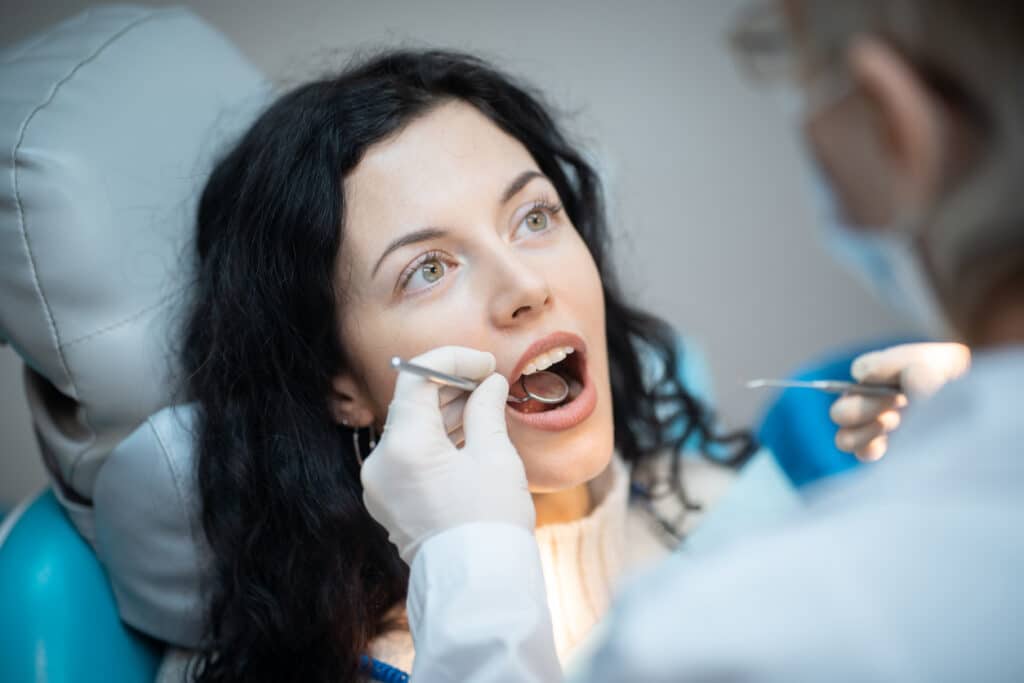
Preventive dental treatments at Chatham Family & Implant Dentistry include thorough dental exams and professional teeth cleanings that remove hardened plaque and use digital diagnostics to detect decay. This routine appointment protects your oral health, avoids costly future procedures, and keeps your smile shining.
Advanced Dental Technology
Our team makes significant investments in advanced dental technology to ensure that your cleaning is quick and pain-free. Instead of traditional hand tools, our hygienists use ultrasonic scalers. The reasoning behind using ultrasonic scalers is supported by medical evidence that demonstrates that ultrasonic scaling is more efficient than manual scaling [1] (Oza et al., 2022). These modern tools use gentle microvibrations and water to remove plaque and tartar. We also use high-definition intraoral cameras that provide real-time images of your teeth. This allows you to see exactly what we see on a monitor from your chair. By using modern technology, we eliminate the guesswork, reduce your time in the chair, and make your preventive care completely transparent.
How Your Smile Impacts Your Body
The American Dental Association supports the view that a number of systemic conditions and diseases can affect oral health, either systemically or due to physical inability to maintain appropriate oral hygiene [2] (American Dental Association, 2023). When plaque hardens into tartar, it creates a breeding ground for harmful bacteria. If left unmonitored, this bacterium can cause chronic gum inflammation. Studies show that untreated gum disease is closely linked to health conditions, including cardiovascular disease, diabetes, and even pregnancy complications. A routine professional cleaning at our Pittsboro clinic does more than brighten your smile. It actively reduces inflammation in your body, ultimately protecting your heart and immune system.
Table that compares routine and deep dental cleanings
Feature | Routine cleaning | Deep cleaning |
Goal | Preventive maintenance | Treat active gum disease |
Target area | Above and below the gumline | Deep beneath the gumline |
Maintenance level | Bi annual | Quarterly |
Time | 45-60 minutes | 1-2 hours |
Cost | Very low | Moderate partially covered |
Preventive Care Tailored for Every Stage of Life
Our comprehensive exams are tailored to the unique needs of each age group in one convenient location.
- For children & teens: We focus heavily on cavity prevention, offering gentle cleanings, dental sealants, and fluoride treatments to protect growing teeth. We also monitor early orthodontic needs.
- For busy adults, we stress efficiency and gum health, carefully checking for signs of stress-induced teeth grinding (bruxism) and early periodontal disease.
- For Seniors: We shift our focus to preserving natural teeth, monitoring for dry mouth (often caused by medications), and ensuring any existing crowns, bridges, or dentures fit perfectly.
No matter what stage of life your family is in, we tailor the exam to address your specific risks and goals.
Overcoming Dental Anxiety in a Judgment-Free Zone:
At Chatham Family & Implant Dentistry, your peace of mind is our top priority. We actively train our team to practice compassionate, judgment-free dentistry. Clinical evidence supports that Dental phobia is a disabling yet underdiagnosed condition that prevents many patients from seeking essential oral healthcare [3] (Stan et al., 2025). In efforts to practice evidence-based dentistry while maintaining high-quality care, you will find a friendly environment where you are completely in control of your oral care.
Maximizing Your Fresh Smile Between Dental Visits
Protecting your investment between your bi-annual cleanings in Chatham County comes down to a few simple daily habits. To keep tartar at bay, upgrade to a high-quality electric toothbrush. The automatic brush strokes remove significantly more plaque than manual brushing. Furthermore, if you struggle with traditional string floss, consider investing in a water flosser. These devices use a targeted stream of water to flush out food particles and bacteria from deep between your teeth and along the gumline. Finally, drink plenty of tap water throughout the day. Not only does it keep you hydrated, but the fluoride found in the local Pittsboro water supply acts as an invisible shield, constantly remineralizing your enamel.
FAQS
1. How long does a first-time dental exam and cleaning take?
For a new patient at our Pittsboro clinic, you should plan to be with us for about 60 to 90 minutes. This gives us ample time to take baseline X-rays, thoroughly clean your teeth, and allow the doctor to get to know your specific oral health goals.
2. Can I get my teeth cleaned if it has been years since my last visit?
Absolutely. We operate a completely judgment-free practice. Our team is simply thrilled you are taking steps to improve your health today.
3. Do you screen for more than just cavities during the exam?
Yes. Your complete dental exam includes a thorough oral cancer screening, an evaluation of your bite and jaw joint (TMJ), and a check for signs of sleep bruxism (teeth grinding).
References
[1] Oza, R. R., Sharma, V., Multani, P., Balsara, K., Bajaj, P., & Dhadse, P. (2022). Comparing the Effectiveness of Ultrasonic Instruments Over Manual Instruments for Scaling and Root Planing in Patients With Chronic Periodontitis: A Systematic Review and Meta-Analysis. Cureus, 14(11), e31463. https://doi.org/10.7759/cureus.31463
[2] American Dental Association. (2023, September 11). Oral-Systemic Health | American Dental Association. Www.ada.org. https://www.ada.org/resources/ada-library/oral-health-topics/oral-systemic-health
[3] Stan, D., Voicu, D., Zainea, P., Toma, A., & Ciubară, A. (2025). Reframing Dental Anxiety: Cognitive Behavioral Therapy and Its Role in Phobia Treatment-A Narrative Review. Diseases (Basel, Switzerland), 13(11), 377. https://doi.org/10.3390/diseases13110377